


Tile Guide for the Home
Updated: May 1

Wondering where to start when it comes to tile? How do you know what to choose when it comes to bathroom floors, kitchen backsplashes and everything in between? This tile guide for the home will help you navigate those choices with confidence.
Tile is one of the most foundational materials in a home. It carries both visual weight and daily function, which means the decisions you make here will quietly shape how your home feels for years to come. When approached thoughtfully, tile becomes more than a surface, it becomes part of the architectural story.
START WITH THE ROLE OF THE TILE
Let's establish direction in the space. Are you adding detail through tile, or using it to ground the space?
Before selecting a specific tile, it is important to step back and understand the intention behind it. In well-designed homes, every material has a clear role. Tile should never feel like an afterthought. It should support the overall composition of the room.
If the surrounding elements, such as cabinetry, lighting, and architectural details, are already rich with character, tile can act as a quiet foundation. In this case, softer tones, natural stone, or simple layouts allow the rest of the spaces to take the lead.
On the other hand, if the space needs visual interest, tile becomes an opportunity to introduce detail. This is often where pattern, variation, or handcrafted materials can bring depth and personality without overwhelming the room.
There are so many directions to go when choosing a floor or shower tile. Some of our favorites are using tile to create a pattern like herringbone using smaller subway tiles, or creating a detailed mosaic using penny tiles.
When using pattern, scale becomes especially important. Smaller tiles lend themselves to more intricate layouts, while larger tiles create a more expansive and grounded feel. Neither is better. It simply depends on what the space is asking for.
CONSIDER SCALE, PROPORTION AND LAYOUT
One of the most common mistakes with tile is selecting something beautiful in isolation without considering how it will read across the full space.
Tile should always be evaluated in context:
Room Size: Larger tiles can make a smaller space feel more open, while smaller tiles can add texture and intimacy.
Grout lines: More grout lines means more visual movement. This can either add charm or create unnecessary busyness depending on the application.
Pattern Direction: The orientation of tile, whether stacked, staggered, or directional, can subtly influence how a room feels proportionally.
For example, running a rectangular tile vertically in a shower can draw the eye upward and emphasize ceiling height. A horizontal layout, on the other hand, can make a space feel wider and more grounded.

These are quiet decisions, but they have a lasting impact.
ADD INTEREST WITH PATTERN, TEXTURE AND COLOR
There is an endless world of possibilities when it comes to tile colors, patterns, textures and finishes!
The key is not to use everything. It is to use the right combination with intention.
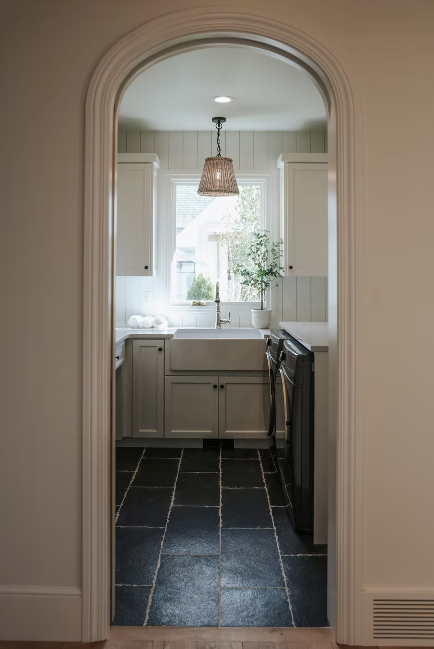
When selecting tile, think in layers rather than statements. A well-designed space rarely relies on one loud moment. Instead, it builds interest through subtle variation:
A soft tonal color palette.
A mix of matte and slightly textured finishes.
Gentle variation within natural materials like stone or handmade tile.
These details create depth without overwhelming the eye.
When it comes to kitchen tile, you can use your backsplash to create a focal point in your kitchen using a mosaic or hand painted tile, or use it to ground the space when other kitchen elements are the focal point.
If your cabinetry or countertops carry strong movement, like heavy veining or bold color, a quieter backsplash allows balance. If your kitchen leans more neutral, the backsplash becomes an opportunity to introduce character in a more controlled way.
MIXING MATERIALS WITH INTENTION
We love mixing patterns when it comes to having multiple tile patterns in the same space. Doing this is a great way to show personality and add contrast in whatever room you are tiling.
That said, mixing should always feel considered, not accidental.
A helpful approach is to vary one element at a time:
Keep color consistent while varying pattern.
Keep pattern simple while introducing texture.
Use one dominant tile and one supporting tile.
For example, a bathroom might feature a larger format stone floor paired with a smaller patterned tile in the shower niche. The contrast adds interest, but the shared tones keep everything cohesive.
Restraint is what makes layering feel elevated rather than busy.
PRIORITIZE MATERIAL AND FINISH
Beyond the aesthetics, the material itself matters deeply. Tile is a tactile, lived-in surface, and how it wears over time should always be considered.
Some guiding principles:
Natural stone offers variation, softness, and timeless character, but requires more maintenance.
Ceramic or porcelain provides durability and consistency, making it ideal for high-traffic areas.
Handmade tiles introduce subtle imperfections that create warmth and authenticity.

Finish is equally important. A honed or matte finish tends to feel more grounded and timeless, while high-gloss finishes reflect more light and can feel more formal or polished.
In Edenbrooke spaces, we often lean toward materials that feel lived-in rather than overly perfect. Surfaces that age gracefully contribute to the home's story.
Tile should feel intentional, not incidental. When it is selected with care, it becomes a quiet foundation that supports the entire home.
The goal is not to choose the most eye-catching option, but the one that feels most appropriate to the space. When tile is aligned with the architecture, palette, and overall vision, it allows everything else in the home to feel cohesive, more balanced and ultimately more timeless.


